

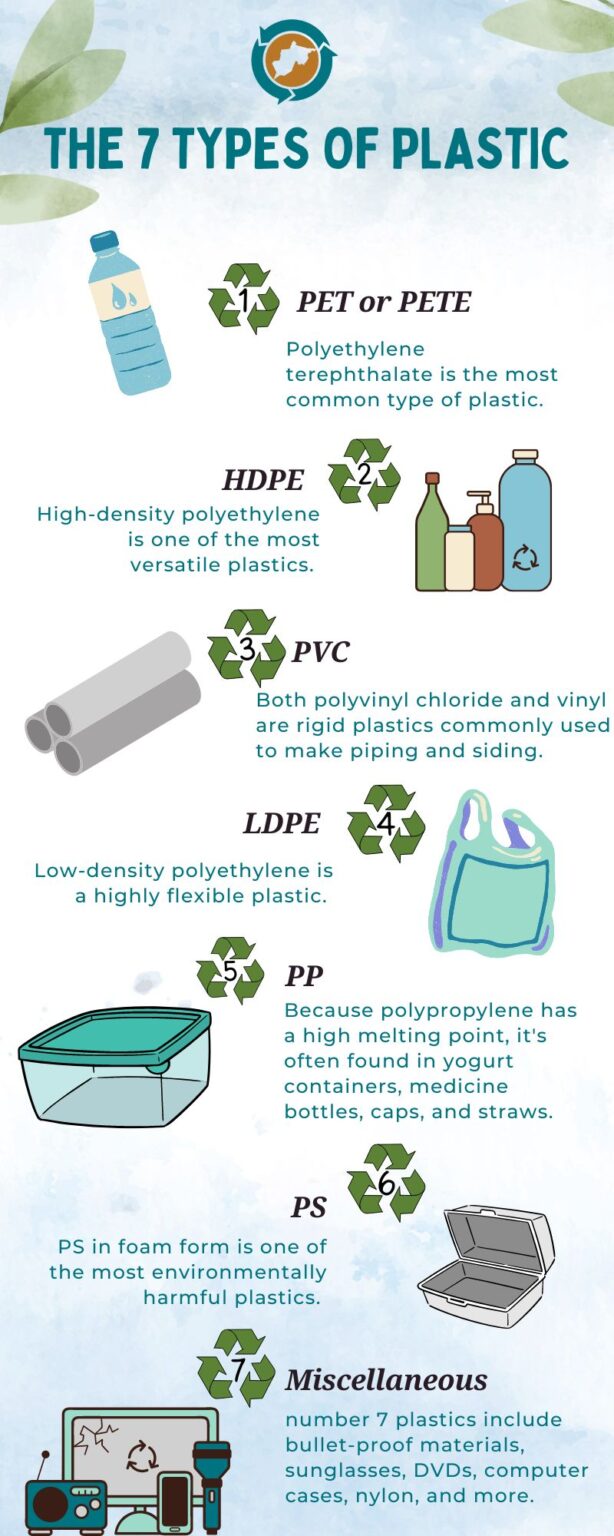
Plastics are in many if not most modern, manufactured products such as cars, clothing, home goods, and much more. Since we are surrounded by plastics, it is important that we understand what they are so we can properly (if possible) recycle them. Did you know that there are seven different classifications of plastics? Some can effectively be recycled and others cannot. Check out the list below to learn more or view our infographic for a quick reference guide.
Simply turn your plastic product over and find the number on the bottom to determine what classification of plastic you have. Randolph County Recycling accepts #1 and #2 plastics. All other categories of plastics need to be disposed of in your regular trash or if it is an appliance or other specialty item during your local bulk pick up day or landfill.
Polyethylene terephthalate is the most common type of plastic and is generally used in single-use plastics such as plastic soda and water bottles, dressing containers, etc. This type of plastic is in high demand and is easily recycled through local recycling programs. You can take your #1 and #2 plastics to Randolph County Recycle Center. This plastic is commonly recycled into polar fleece, fiber tote bags, furniture, carpet, paneling, straps, and containers.
High-density polyethylene is one of the most versatile plastics since it’s used in various products, from milk jugs and detergent bottles to plastic lumber and durable pipe. Most curbside recycling programs can easily recycle household HDPE plastic, like cleaner bottles, into pens, floor tile, drainage pipe, fencing, recycling containers, and more. You can take your #1 and #2 plastics to Randolph County Recycling Center.
Both polyvinyl chloride and vinyl are rigid plastics commonly used to make piping and siding. Because PVC is cheap, it’s also used in other products, including blister packaging, wire jacketing, windows, and more. Unfortunately, PVC and V can rarely be recycled, but plastic lumber manufacturers at times will accept them.
Low-density polyethylene is a highly flexible plastic found in squeezable bottles, bread, frozen foods, shopping bags, and dry-cleaning bags. Only a few recycling programs across the county can accept LDPE, which means anything containing LDPE, such as toothpaste tubes, can be thrown in the trash.
Because polypropylene has a high melting point, it’s often found in yogurt containers, medicine bottles, caps, and straws. Products containing PP can be recycled into battery cables, brooms, brushes, auto battery cases, bicycle racks, landscape borders, and more where programs exist. At this time. our local residents can throw these plastics into their regular trash.
Polystyrene is frequently made into rigid foam products and is most calmly known as Styrofoam. PS in foam form is one of the most environmentally harmful plastics because it easily litters environments and never decomposes. Additionally, the material is extremely challenging to recycle, meaning very few recycling programs agree to collect it. We recommend when disposing of foam products, carefully place the entire item in a bag and squeeze out the air to prevent bits of foam from dispersing into the environment and put it in your regular trash.
All the remaining wide variety of plastics that don’t fit into the last six categories are grouped into this final category. For example, Polycarbonate and PLA (polylactic acid) are two types of plastic that fall into this category. Items that contain number 7 plastics include bullet-proof materials, sunglasses, DVDs, computer cases, nylon, and more. Traditionally local recycled programs don’t recycle these types of plastics. It’s best to dispose of these plastic products properly or find a new use for them.
The Electronics Recycling for this Saturday, August 15th, has been cancelled.
The event will be rescheduled at a later date. We apologize for any inconvenience.
Annual Adopt-A-Highway Spring Cleanup set for April 25th
The West Virginia Department of Environmental Protection (WVDEP) is now accepting registrations for the Adopt-A-Highway Spring Statewide Cleanup set for Saturday, April 25, 2026.
Individuals, families, churches, businesses, schools, civic organizations, government agencies and communities can register to pick up trash on almost any state-maintained road, back road or main route. Private roads and interstate highways are not eligible for adoption.
The Adopt-A-Highway program provides garbage bags, work gloves and safety vests to volunteers, and takes care of disposing of collected trash. Volunteers must be at least 12 years old to participate.
Groups must register in advance by April 17, 2026, and inform their county DOH garage if they need supplies. To register, call 1-800-322-5530 or email dep.aah@wv.gov . If you reach the REAP voicemail, please leave your name, phone number, group name, date of cleanup, number of participants, and the county where your adopted road is located.
The 2025 Adopt-A-Highway Spring Cleanup had more than 1,900 volunteers from over 250groups who removed nearly 79,000 pounds of litter from almost 600 miles of roadway.
Co-sponsored by the WVDEP and the state Division of Highways, the Adopt-A-Highway program is administered by the WVDEP’s Rehabilitation Environmental Action Plan (REAP).The REAP program empowers citizens to take ownership of their communities by providing technical, financial, and resource assistance in cleanup and recycling efforts.